
Spring Song Softens into Summer
I don’t know what the world would be like without birds.

February
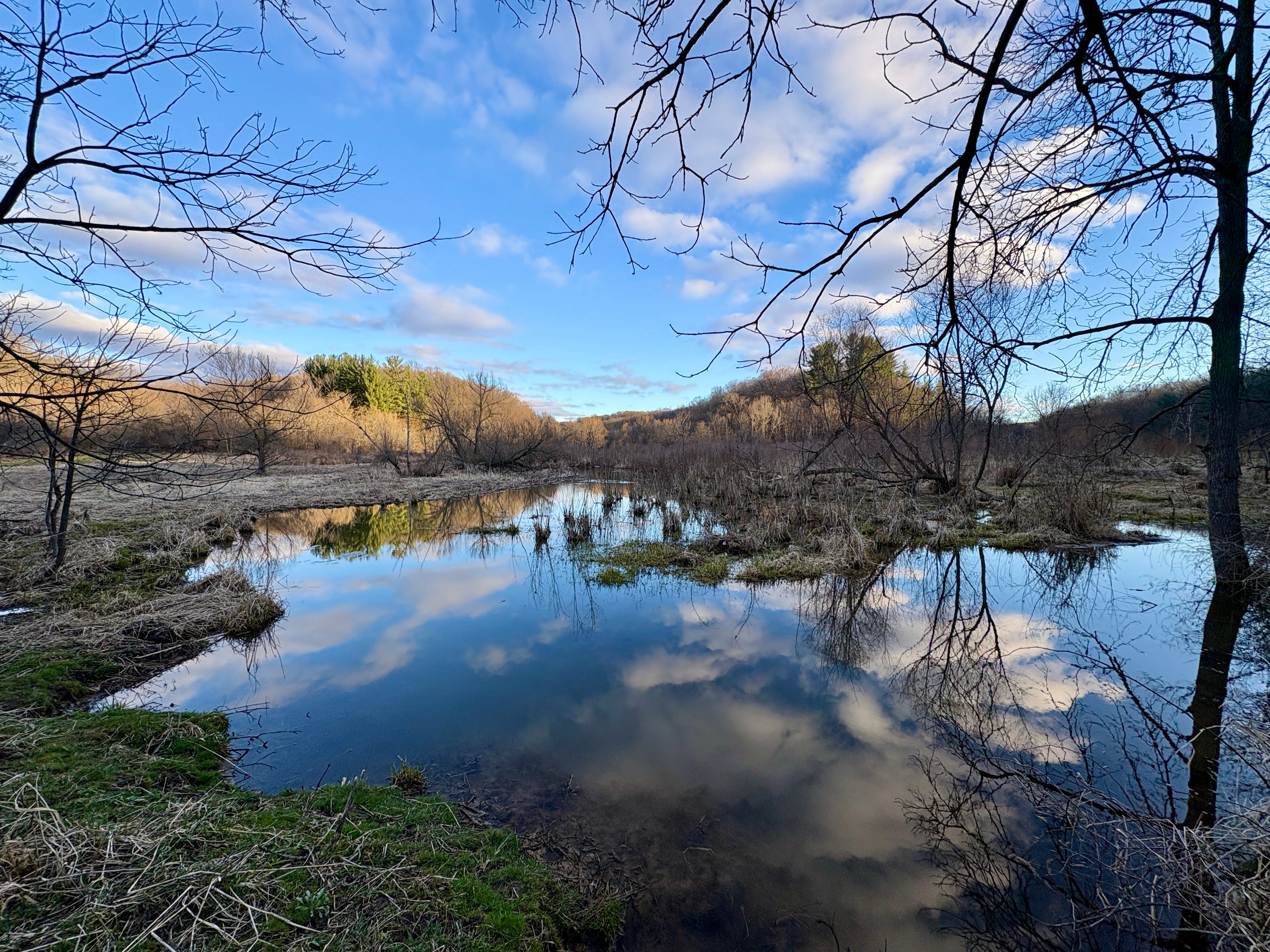
It was a bright blue morning, the prairie glowing golden in the late-winter valley. We stood in awe at the contrast of colors and the stillness present between soil and sun. Then, a sudden show of white appeared over the hill we were tucked beneath. It took us a moment to register who it was—a flock of Tundra Swans traveling north in perfect migratory form. They flew so low and the moment stood so quietly that we could hear the rhythmic flap of their wings lifting and sinking on the unusually warm February air. After a moment of taking in the scene, we noticed an anomaly. A half dozen or so of the swans on the end had a different color and wing shape. They were not swans, but Canada Geese, lined up on the left-hand side of the formation, matching the pace of the swans in flight. One flock, two species.
It was a remarkable show of interspecies solidarity that was not lost on me or the others I was with. The ICE raids were ongoing in Minneapolis, and here was a mixed flock of birds traveling north across the borderless sky. No one in the group had ever seen anything like it before. As we watched them fade into the distance, I thought about how the farther you travel above ground, the more unified the world becomes. Fence lines fade into county lines, which become state lines. State lines dissolve into regions that make up countries. Countries form continents, and if you keep traveling, the Earth becomes one unified blue-green sphere floating in space. You wonder how anyone could ever think they own any bit of it. There are no borders in the bird world, nor in this world if we make it so.
March
This morning, Cardinal sings his song from a high perch. The first two notes begin low and draw energy inward, as if he is gathering up the courage to say something. Then he shoots a series of quick, piercing notes which cut through the air like arrows inscribed with messages. Wake up, wake up. Wake up to the beauty. Look up, look around, look down. His song pierces the invisible veil that disconnects me from him. It pierces the lies the modern human world is built upon, the delusions of separateness that lead us to wars against our human kin, wars against the wild beauty of this home we share, wars against ourselves. Wake up, wake up. Wake up to the beauty. Look up, look around, look down. Come out from the tired room of your mind, take down its walls, let the wind in, let my song in, let my song in.
We’ve forgotten that the birds are watching us. To them, everyone belongs. There is no human world separate from the animal world. There is no nature and non-nature. It is all part of the whole. It is we humans who have divorced ourselves from the earthly neighborhood and severed our own belonging.
I wonder what Cardinal thinks of us. I wonder what he sees from his high perch on the Red Maple. I wonder what he knows that we have yet to learn. The wise ones seem to hold an expansive perspective, and he dwells in that realm daily.
April
Courting Eastern Bluebirds teaches you about the gift of being chosen and the heartbreak of not. They are a bird that asks a lot of you if you fall in love with them.
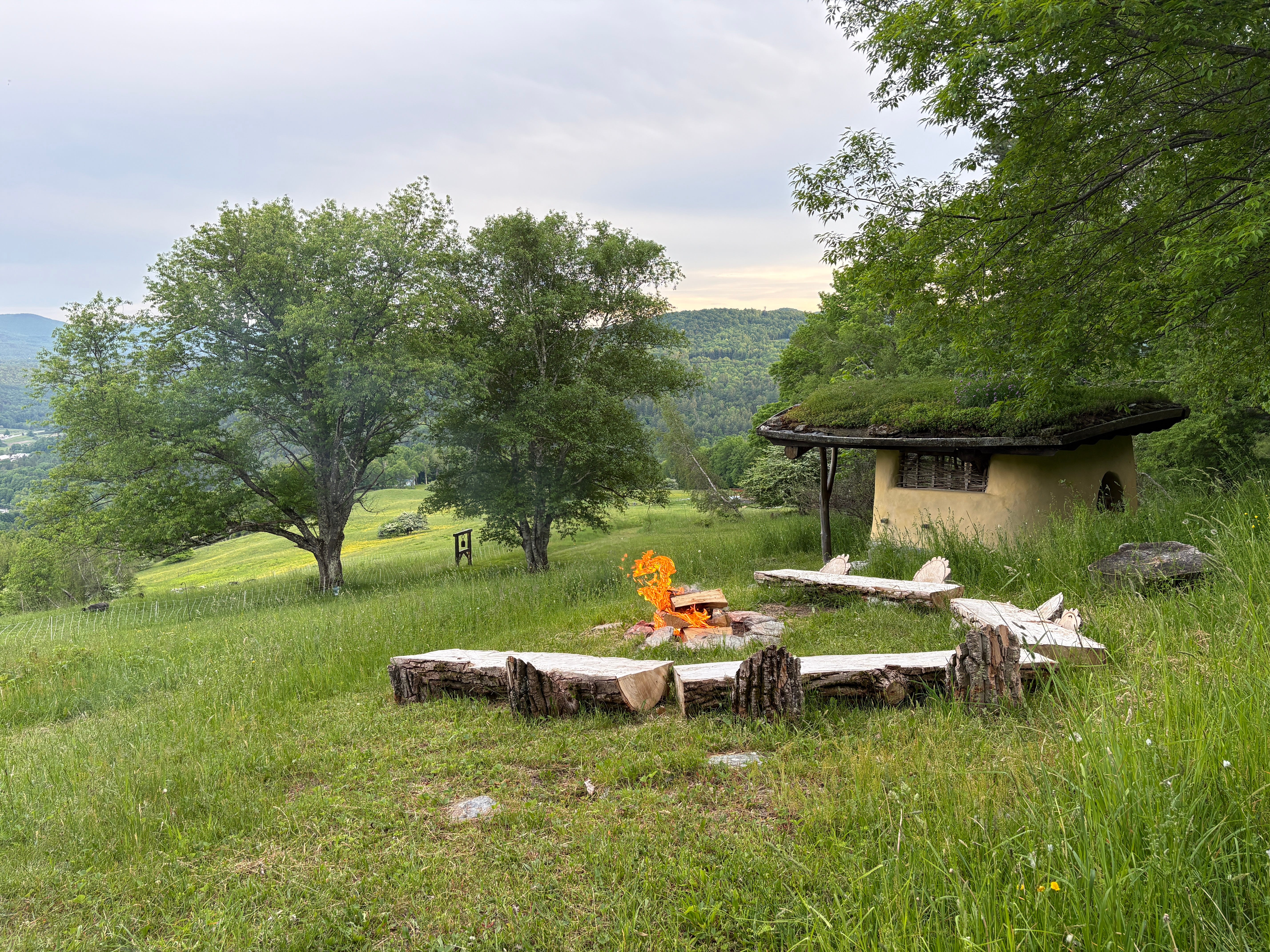
Without a plan or date on the calendar, my dad and I have developed a tradition of Bluebird courtship by which we spend an afternoon cleaning out and repairing houses together each spring. We compete to see whose house the birds will make their home in. I’m proud to say last year they nested in my house. It was the oak shingles, I say jokingly. Truthfully, aesthetics are unimportant to the Bluebird, but they do choose their home carefully, as location matters greatly to their success.
They like to start fresh each spring and prefer you do the cleaning before they arrive hungry and ready to start making a nest inside after migration. Bluebirds, like most birds, cannot lay eggs and raise their chicks on birdseed alone. There must be an adequate insect population around to support the high protein requirements of breeding season. To grow an insect population, their house must be near adequate insect habitat, which in our case is a Midwestern tallgrass prairie, burnt every three years to maintain its health. To court the Bluebird in Southwest Wisconsin, one must court Insect by courting Prairie and Oak. One must know the path of the sun, as they like an eastern-facing door, sheltered from the prevailing winds. But perhaps most importantly, one must feel intuitively for the correct location, because their choice is somewhat of a mystery. A by-the-books birdhouse placement might not yield a new resident. You have to become Bluebird to court Bluebird.
I grow a bit anxious in the spring, wondering if the mating pair will return this year. Have we kept the prairie in good health? Have we adequately tended to their houses? Have we been peaceful neighbors? Have we done enough?
In human society, we wound ourselves with questions of enoughness. But in the more-than-human world, I think we ought to ask ourselves more often whether or not we’ve done enough. We’ve become Takers in the dominant culture that speaks of the natural as Resource. We harvest as much as we can and return as little as possible to make a profit on the gifts of the world. But Bluebird has no interest in this way of living. She goes where humans walk the soft Earth with reverence. Where she feels treated as kin, neighbor, and friend. She demands love, commitment, and protection.
I think Bluebird asks a lot of us because she believes in us. She sees what we can create when we live in right relationship with all who live and breathe. She sees our magnificent ability to set fires that harbor new life, and to uproot inflammation on the land. She sees our ability to spread information widely, preserve stories for thousands of years, craft and shape cultures that serve abundant life. She is grateful for our ability to plant seeds, build homes for animals, clean up rivers, and foster habitats for those that need extra support.
Bluebird calls us to return the gift, and she demands we do it with care and attention.
The mating pair arrived in late April. The sight of their blue bodies and rusty, red chest made my heart leap with excitement and relief. They took residence in a new birdhouse my dad and I built, the one that faces east. Bluebirds are a gift to know and be in relationship with. I hope they are beginning to think the same of us, stewards of the ecosystem, the ones who help create the conditions for beauty to thrive. May it be so.
May
One of the first things Peter told me when I arrived at Knoll Farm was how lucky I was to live in the Mountain Yurt because I would get to know Hermit Thrush. I could see a glimmer in his eyes when he spoke of this bird; they had a special connection. I didn’t know Hermit Thrush. He migrates through Wisconsin but does not nest there as he does in the Green Mountains of Vermont.
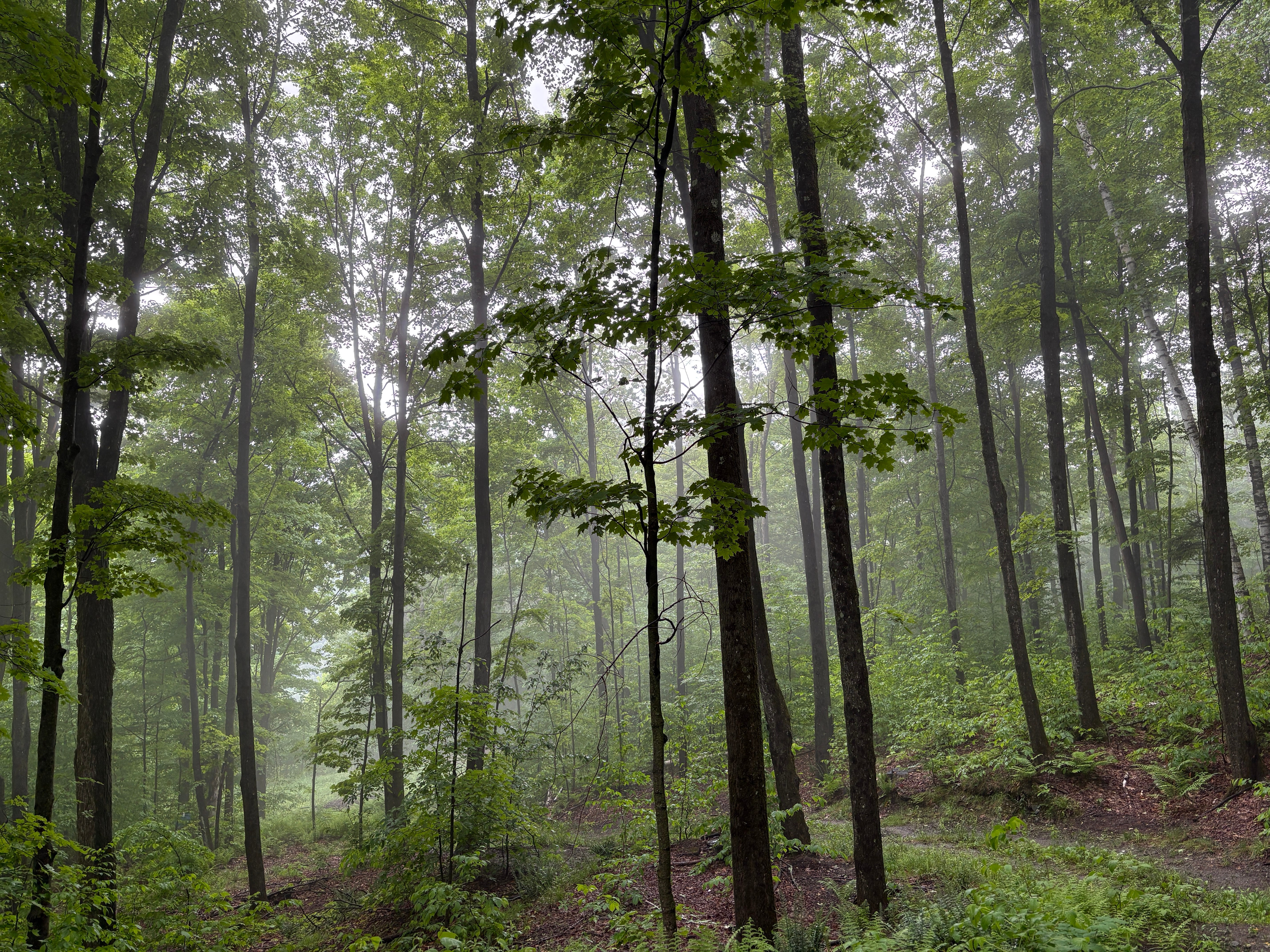
The Mountain Yurt is a half-mile hike up from the main house and barn, surrounded by open woodland bursting forth with Maple and Fern. The yurt was the first iteration of what has now become The Refuge, a place of retreat for social and environmental justice leaders and organizations working to heal what is broken in our culture. It is no longer in use for programming, as it is a good distance from the main barn, so it hasn’t been occupied for years.
Peter spoke of Hermit Thrush with such reverence that I got to thinking about how I might introduce myself to this bird and all the more-than-human beings with whom I would become neighbors this summer. How might I introduce myself to the four-legged ones who watch from a distance, studying my habits, curious about my intentions? To the spiders who’ve been residents of the yurt for a long time? To the mice and toads who rustle in the leaves? To the spring dripping from the mossy rock? To the mountain who cradles me?
We’ve become an entitled species, at least in the culture I was raised in. We think only of ourselves when making home in a new place. The best view, the most suitable slope. We harvest trees without their permission, disturb soil life without laying down our blessings, drill wells without consulting the water. A place is a non-living entity only in a dying culture.
What if we treated a place like a person? Someone worthy of an introduction? A being who holds stories, who has a history, who speaks through metaphor?
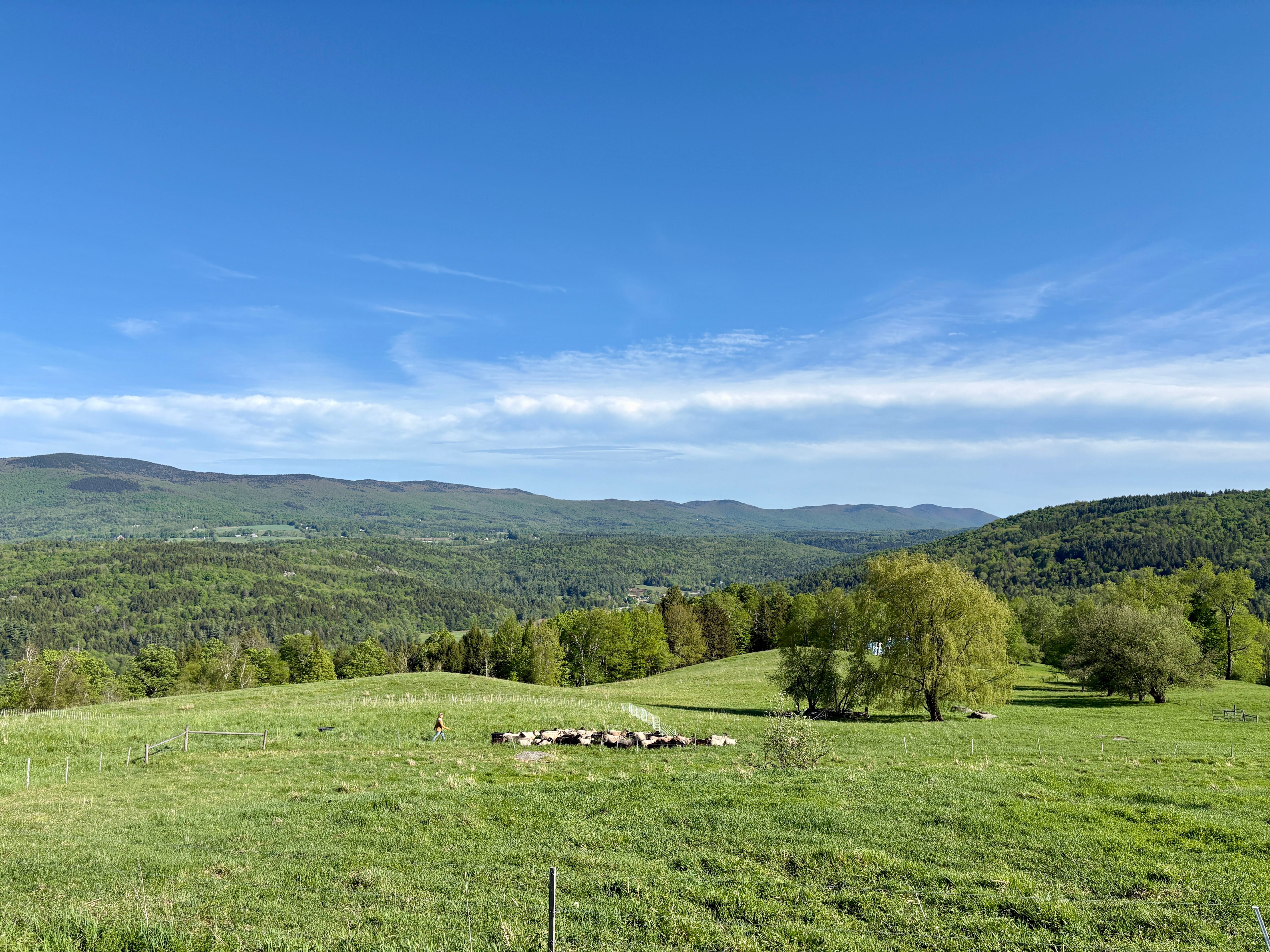
On orientation day for the farm and retreat staff, Peter led us in an introduction to the land. We stood on the hillside at the site where the first settler in Vermont, Rufus Barrett, made his home on top of Abenaki homelands. Today we call this Knoll Farm, but it had a different name when Barrett lived here, and a different name before him when the Abenaki hunted deer on the south-facing slopes they cleared for browse.
Does a place have a language of its own? Does she mind what we call her? Does she change shape when we give her new names and bury the old ones? Does she want to make our acquaintance?
I say hello to Hermit Thrush, and Wood Thrush, and Ovenbird, and all who live here. I tell them my name, why I’m here, and what my intention is. I ask them for permission to dwell here. I ask them to help me see how I might contribute to this place, be an additive force, rather than a subtractive extractor. I am their student. I am listening. I am learning that a place is a living being, ancient and wise. I am learning to walk with humility.
June
Spring song softens into summer hymns. By now I’ve learned that Hermit Thrush likes to sing in the morning, while Wood Thrush shares his voice in the evening. The forest is a bit quieter with nesting season well underway, and some birds have crossed into Canada to raise their young. Those who remain have begun to harmonize with each other, and I sing to add my notes while I walk. Black Bear has come to visit, and Deer left her tracks for me to see that she is here, too.
I don’t want to keep living the story that humans are destroyers of the Earth. I don’t want to be a stranger to my wild kin. I don’t want to question my belonging or purpose. I don’t want to wonder what good I could possibly do, nor walk with the posture of severed belonging. I want to repair, I want to mend, I want to heal. I want to sprout life from my pores, make trails in new directions. I want to lay down gratitude everywhere I travel. I want to walk with dignity, not because I’ve earned it, but because I live like the animals, in reciprocity. There is no other way.
We are bodies of sacred water, wrapped in soft bark. We are vessels, we are gardens, we are songs waiting to be sung.
Beautiful Ryan! I love the flow of spring song to summer hymn!
I'm so inspired by your writing! It is such a craft how you are able to take readers to a peaceful space.
Missing the cabin and family projects currently, but appreciating the fresh quiet air outside my window and will listen for the birds tomorrow.